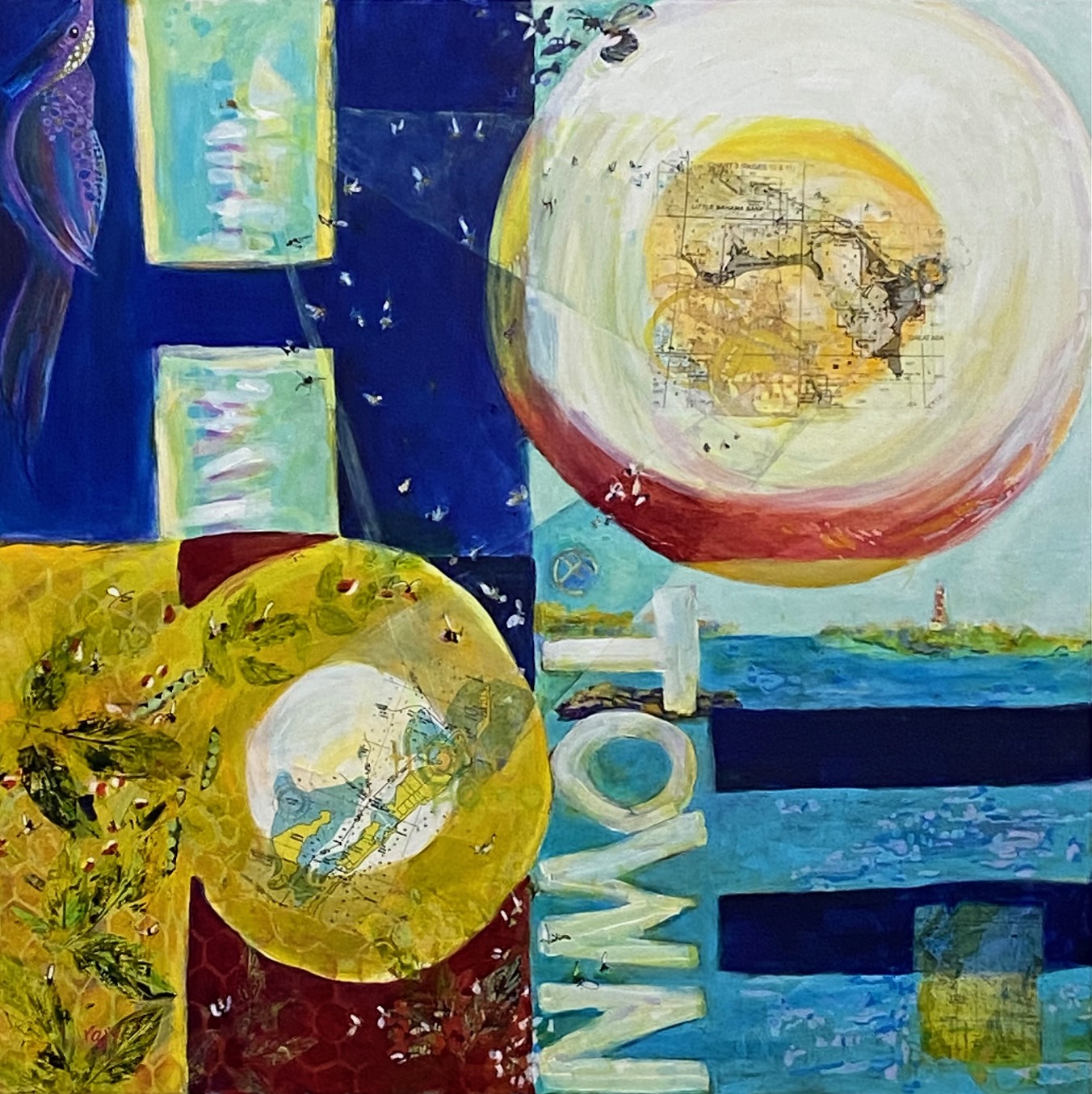
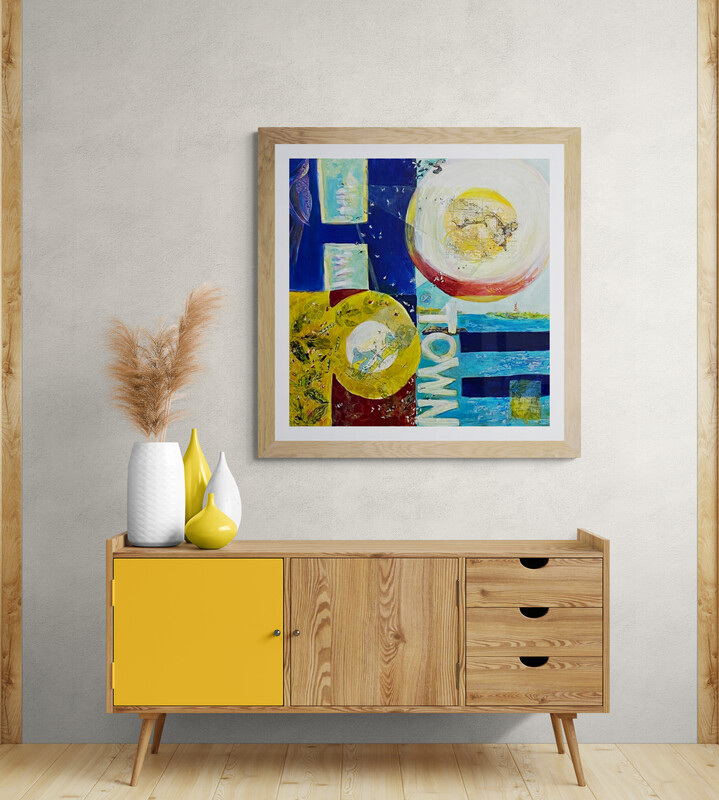
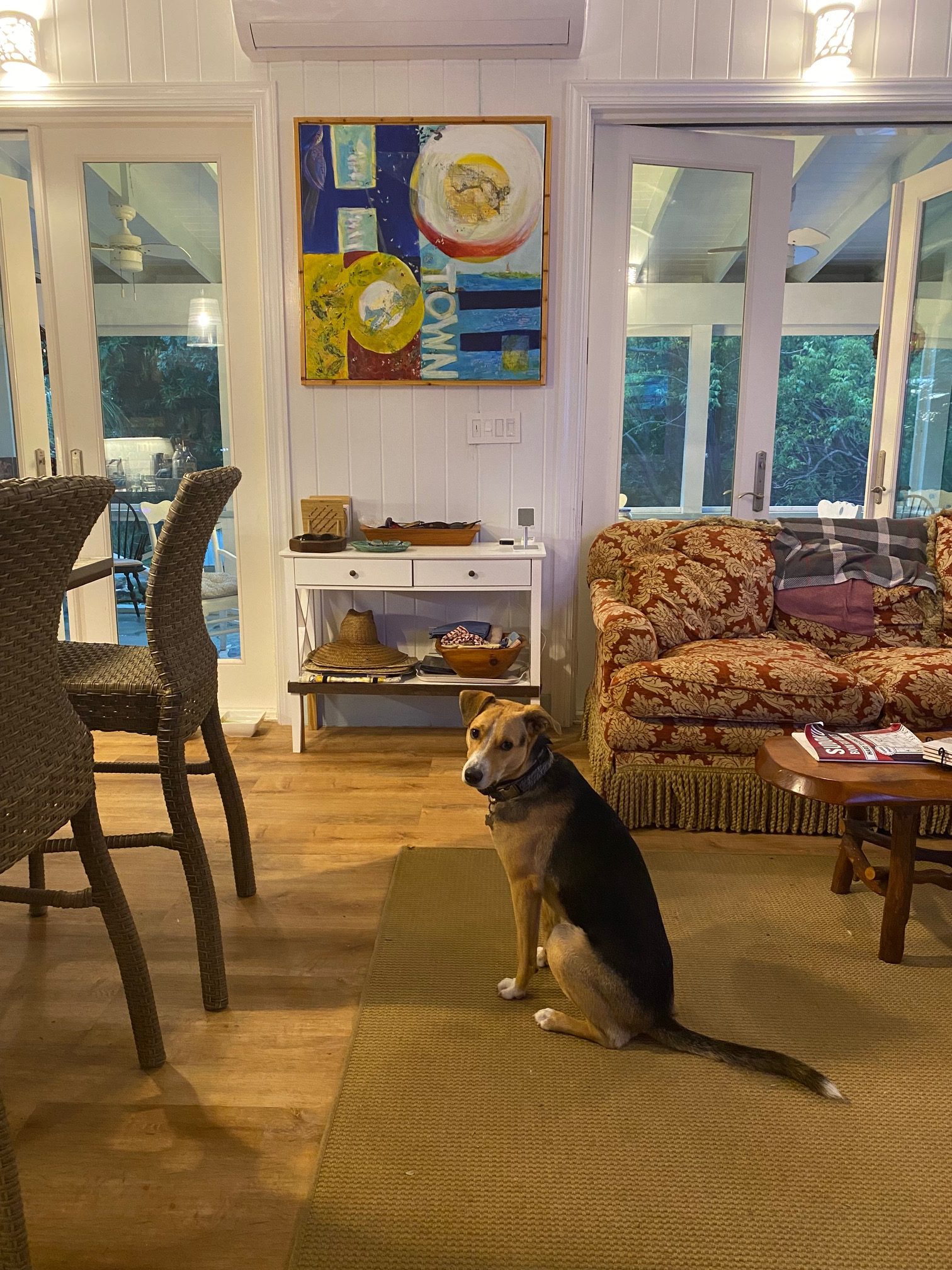
Feels Like Home grew out of a question about what actually holds a place together. Instead of painting Hopetown as a view, I focused on the systems underneath it — ecological, navigational, and lived.
The composition developed through layering and revision: charts embedded into paint, circular forms built up and softened over time, and small, persistent marks that track movement and continuity. Bees became agents rather than decoration, culminating in a queen mating flight that anchors the painting’s sense of future and survival. Pigeon peas act as a quiet foundation — a reminder that sustenance and pollination come before landmarks or nostalgia.
Human structures appear, but they are not fully in control. A lighthouse burns in the distance, visible only through a window, suggesting guidance that can fail while biological systems continue to function. Throughout the process, edges were adjusted, softened, and reopened to keep the painting from becoming emblematic or overly resolved.
The final surface reflects that tension: between order and permeability, intention and accident, signal and resilience. Feels Like Home is less about depicting a place than about tracing how belonging is built — through use, interdependence, and time.